 TAMU SEDS
TAMU SEDS
TAMU SEDS
We are Texas A&M SEDS Solar Sail (TAMU SSS)—a student-led project under the Texas A&M chapter of SEDS—and we are building a satellite that will sail in space using nothing but sunlight.
While this may sound sci-fi, solar sailing is a technology that has already been successfully demonstrated several times in space. It is not mature enough yet for widespread use, but we at TAMU SSS aim to help change that. As a student project, we believe that we are uniquely positioned to take risks and develop bold innovations that will push forward the field of solar sailing and realize its potential for applications such as asteroid scouting, solar observation, orbital debris mitigation, interplanetary missions, and more.
To that end, we underwent a full year of in-depth research and expert outreach before deciding to pursue a novel sail deployment strategy utilizing shape memory alloys (SMA), which has enabled us to develop a next-generation solar sail concept with lower mass, faster acceleration, and improved reliability. Since then, we have been conducting R&D on our concept and working towards the launch of Solaris I: a small-scale solar sail mission which will deploy from the ISS and demonstrate our novel solar sail technology.
If you are a fellow student passionate about space and wanting to work on hardware going to orbit - apply to join our team!
If you are an industry professional/researcher who would like the opportunity to hear more about our project and provide some feedback - please reach out!
More information can be found below for those interested!
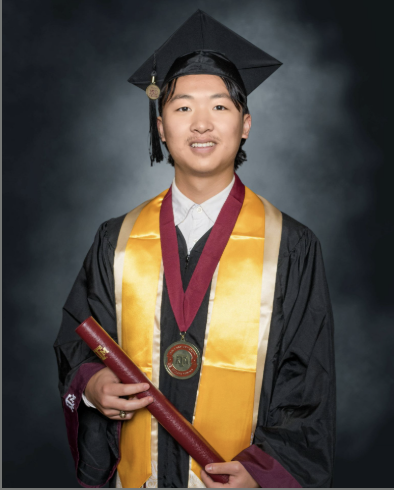
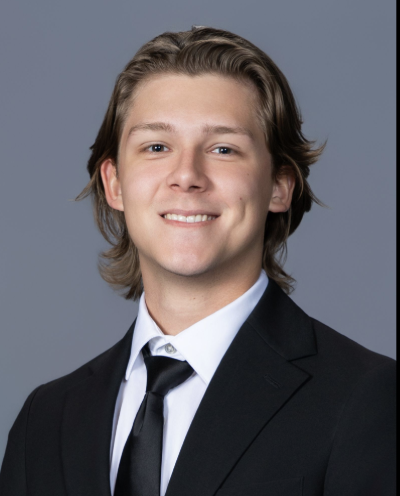

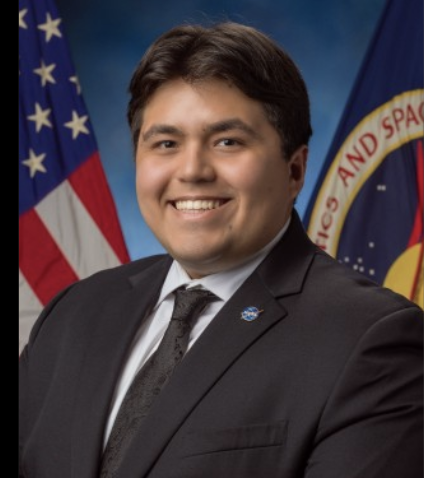
Starting in Fall 2026, TAMU SSS will be split into the following 8 subteams:
After completing a full year of in-depth research and expert outreach, we decided to pursue a novel sail concept that utilizes shape-memory alloy (SMA) deployment to produce lighter, more efficient, and more reliable solar sails. Since then, we have been conducting R&D on our concept and working towards the launch of Solaris I: a small-scale solar sail mission which will deploy from the ISS and demonstrate our novel SMA deployment technology.
Check out our CONOPS to learn more about the mission and how we strive to test our prototype in space!
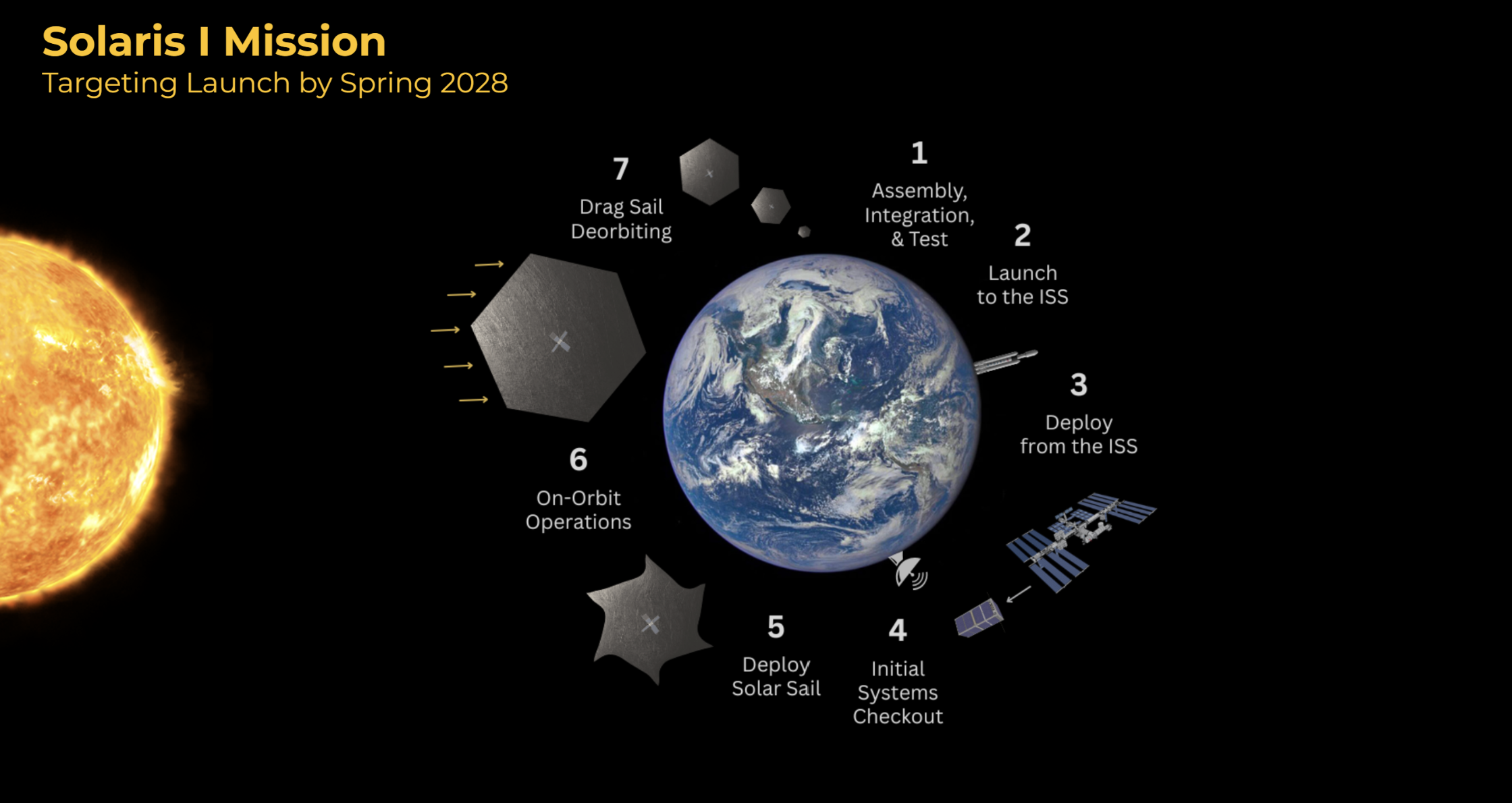
Targeting Launch by Spring 2028
The spacecraft bus and solar sail payload are assembled, integrated, and put through rigorous environmental and functional testing to verify they're ready for launch.
The spacecraft launches as cargo aboard a resupply mission bound for the International Space Station.
Once aboard the ISS, the spacecraft is released into orbit by the station's robotic arm to begin its independent mission.
Engineers verify that all subsystems — power, communications, and attitude control — are functioning correctly before sail deployment.
The reflective solar sail unfurls from its stowed configuration, transforming the spacecraft into a large sunlight-propelled structure.
The mission enters its primary operations phase, demonstrating solar sail propulsion and collecting data on sail performance in orbit.
At the end of the mission, the spacecraft is safely deorbited to burn up in Earth's atmosphere, leaving no lasting orbital debris.
← Scroll for more →
Applications are open!! Click here!
Round 1: Applications
Simply go to the application form, fill it out, and submit!
Round 2: Interviews
SSS interviews will follow a traditional interview format, consisting primarily of behavioral questions.
Want to learn more in the meantime? Join our Discord and ping our leads, or email us at tamu.seds.cstat@gmail.com.
Solar Sail is funded by donations and fundraising, as well as support from Texas A&M's College of Engineering. We're attempting to launch our Solaris I demo mission into orbit by 2028 and could use all the support and help possible.
Financial Contributions
Every donation — large or small — goes directly toward materials, testing, and travel for the mission.
In-Kind Donations
Have materials, lab time, fabrication capabilities, or hardware that could help the mission? We'd love to talk.
Expert Feedback & Mentorship
If you have experience in aerospace, systems engineering, or mission design, we're always looking for outside perspective and review.
Spread the Word
Sharing our mission with your network — whether that's another company, a university, or a fellow space enthusiast — helps more than you'd think.
If you would like to hear more about our project, provide expert feedback, or support us in any other way, please reach out to us at tamu.seds.solarsail@gmail.com! You can also email tamu.seds.cstat@gmail.com for a copy of our sponsorship prospectus.